


Oakwater Advisors · For Physician Assistants

For physician assistants

You take care of everyone else. Let’s name your next three moves.

On our first call, by phone or Zoom, we’ll look at your contract, your benefits and your loans, and name the three things worth doing first. They’re yours whether or not we work together.

Alex Lawrence, financial advisor
Alex LawrenceFinancial advisor for physician assistants

Your two-minute check

6 questions

Would your disability coverage pay if you couldn’t work as a PA?

Why Oakwater

Most advisors start with your investments. I start with your Largest Asset.

Your income is the largest asset you have. First, consider how you’d replace it if an injury or illness kept you from practicing. Then we build a Reservoir around it, so your savings rate can climb as your pay does.

1

Protect your income

Disability insurance you own, built around your specialty

Get a PA disability quote
2

Harness your income

A Reservoir, so more of each raise can go to savings

Try the Reservoir calculator
3

Deploy your savings

Loans, investing and retirement accounts, coordinated across every employer

See the whole plan

My promise: As a fiduciary, if you pay me to manage your money, I should keep earning it. I look for opportunities all year, not just at your annual review, and bring them to you first. When something falls outside my licenses, I’ll bring in the right CPA, attorney or specialist and work alongside them.

  • Series 7
  • Series 63
  • Series 66
  • Life & Health
Check my record on FINRA BrokerCheck (opens in a new tab)

Who we help

Wherever you are in your PA career.

Early career

Just signed your first contract?

The first few years set the habits that compound for decades. Getting them right now is far easier than fixing them later.

  • Own-occupation disability before you ever need it
  • A student loan plan you chose, not one you defaulted into: PSLF, refinance or payoff
  • A Reservoir, so saving happens before spending
  • Your full employer match, from day one
  • Life insurance and beneficiaries set up as your family grows
Book a call
Mid to late career

Well into your career, with $250k+ saved?

You’ve done the saving. Now the questions get bigger: how it’s invested, how it’s taxed and when work becomes optional.

  • Investment management built around your timeline
  • 401(k), 403(b), 457(b) and IRAs coordinated across past employers
  • Tax-aware account choices, coordinated with your CPA
  • A retirement income plan: which accounts, in what order
  • Coverage that still fits now that the loans are gone
Book a call

The problem

PA school covered a lot. Money wasn’t on the syllabus.

Most PAs we meet are doing plenty right. The trouble is that nothing is connected.

01

Coverage that ends when you leave

Employer disability often pays less than you’d expect and stops when you change jobs, and PAs change jobs often.

02

Loans on autopilot

A default repayment plan can cost thousands, or quietly derail forgiveness you were counting on.

03

Raises that disappear

Raises and new contracts often lift spending first, so the savings rate may not move.

04

Accounts scattered across employers

A 403(b) here, a 401(k) there, a 457(b) you’ve never looked at. No one is managing the whole thing.

05

Advice in silos

Your CPA, insurance agent and HR benefits portal each see one slice of the picture.

06

No finish line

Without a target, it’s hard to know whether you’re on track, or when work becomes optional.

The fix isn’t more products. It’s one plan, in the right order, with someone keeping every piece pointed the same direction.

The Oakwater approach

Three moves, always in the same order.

Investing hard means little if one uninsured accident can undo it, and returns matter less if leaks in your cashflow stop you from investing in the first place. So we protect first, harness second, deploy third, and revisit all three as life changes.

Start here

Protect your income and what it’s built

Emergency reserves, insurance, wills, trusts and beneficiaries. The unglamorous layer that helps keep one bad year from undoing ten good ones.

Protection check-up Example
  • Emergency reserve3-6 months of expenses, in savingsCovered
  • Disability insuranceEmployer plan plus an individual own-occupation policyCovered
  • Term life insuranceShort of what the family would needGap found
  • Home, auto & umbrellaNo umbrella liability policy yetGap found
  • Wills, trusts & guardianshipDrafts with an estate attorneyIn progress

Then

Harness the power of your income

Cash flow, taxes and workplace benefits. Most households have more room than they think, and it’s usually hiding in the paycheck.

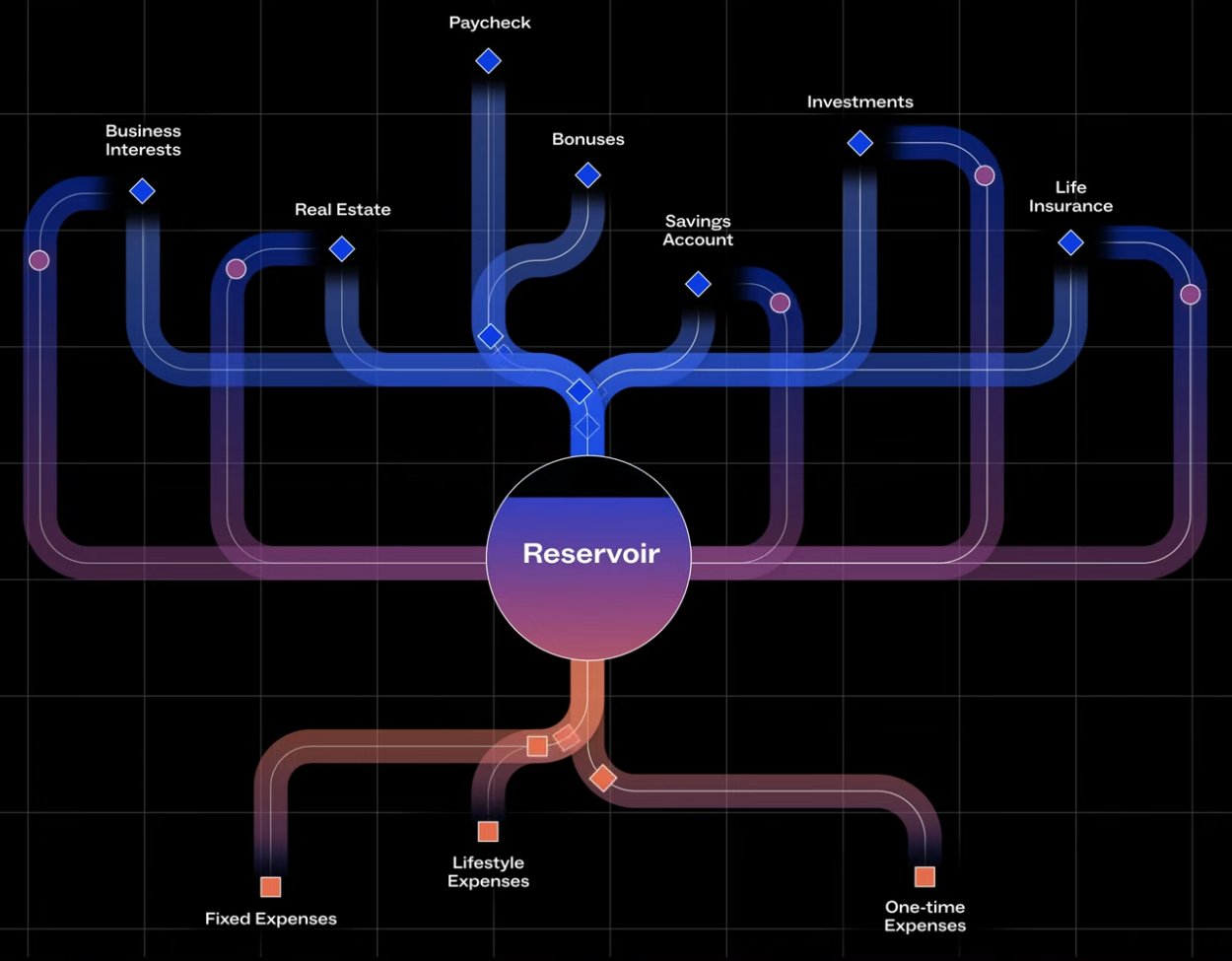
Diagram of a Reservoir: paycheck, bonuses, savings, investments, real estate, business interests and life insurance all flow into one Reservoir, which then flows out to fixed, lifestyle and one-time expenses.
The Reservoir. Every dollar coming in lands in one place first, then flows out on a plan: to fixed bills, lifestyle and one-time costs, and to savings for your goals and retirement. Every dollar has a job. See how the Reservoir could work for you

Finally

Deploy it for growth

Investing, retirement income, education and giving. Money put to work on a timeline that’s actually yours, not a generic one.

Goals on the calendar Example
  1. 2028First home down payment78% funded
  2. 2036College, first child41% funded
  3. 2043A sabbatical year22% funded
  4. 2052Work becomes optional35% funded

Your advisor

Hi, I’m Alex. Roots that hold. Money that moves.

I’m the advisor behind Oakwater Advisors. The two things I love most are the outdoors and financial planning, so I built something that represents both.

An oak grows slowly and is built for storms it hasn’t seen yet. Water does the opposite: it keeps moving and finds a way through. A good plan needs both: foundations that barely change, and money inside them that keeps working.

Alex Lawrence, smiling, in a light plaid jacket and blue shirt
Alex LawrenceFinancial advisor

Resources

Start on your own. We’re here when you want a second set of eyes.

Three guides, a disability quote tool and a calculator, built around the same three moves we use in every plan.

PDF guide · 7 pages The PA Money Playbook Protect · Harness · Deploy

For physician assistants, from first contract to last shift

Why PA finances work differently, and a checklist for each of the three moves.

  • Disability, malpractice and loan decisions
  • What to do first as a new grad or mid-career PA
  • A 12-question self-check and scorecard
Quote tool PA Disability Quote Protect your ability to practice.

See how much of your income you could protect

Five short sections, no Social Security number and no health questions. Then send Alex your quote request.

  • What your group coverage really pays
  • How much individual coverage you could add
  • A quote request ready to send
PDF guide · 8 pages The Retirement Playbook Four buckets. Income that lasts.

Turn your savings into income that lasts

The 4 Bucket Strategy, organized into Protect, Harness and Deploy, with a countdown from 10 years out and a checklist and scorecard at the end.

  • Four retirement concerns, four buckets
  • Social Security, Medicare and a personal pension
  • Taxes, Roth conversions and withdrawal order
  • A 15-question checklist and scorecard
PDF guide · 6 pages Reservoir Savings Save by default. Spend by decision.

A simple cash-flow system that raises your savings rate

Why your savings rate matters more than your returns, and how to set up a Reservoir in five steps.

  • What an optimal saver looks like
  • How money flows in, out and back to work
  • A one-page cash-flow map
Calculator Reservoir Savings Calculator Same paycheck. A very different result.

See what slowing your spending growth could add up to

Enter your income, what you save and your time frame. Compare your current path with a Reservoir in under a minute.

  • Your savings rate today vs. over your lifetime
  • Dollars saved, or at a hypothetical 7% return
  • Year-by-year breakdown

Questions

Good questions to ask before you start.

Don’t see yours? Ask it on an intro call.

Do you only work with PAs?

PAs are our focus, so we know your contracts, benefits and loan options well. We also work with owners of closely held businesses. See planning for business owners.

I’m a new grad with loans and not much saved. Is it too early?

No. The first few years are when planning can pay off the most, because good habits have the longest to compound. Any fees are explained on the intro call and in writing before you commit.

Should I go for PSLF?

It depends on your employer, loan type, income and career plans. We’ll walk through the options with you and pick one deliberately, then revisit it if your job changes.

I already have a CPA. Why would I need a financial planner?

Your CPA mostly looks back at the year that just happened. Planning looks ahead: protection, cash flow, investments and retirement, in order. We work alongside your CPA and attorney so everyone’s advice points the same direction.

How do you get paid?

Financial planning is fee-based, and the fee is quoted up front, in writing, before any work begins. If we also manage investments or help with insurance, we’ll explain exactly how we’re paid for each. OneAmerica Securities’ Form ADV Part 2 and Form CRS have the details.

What happens on the intro call?

It’s a conversation by phone or Zoom. We talk about where you are and what’s on your mind, and you leave knowing whether working together makes sense. No prep needed.

Get started

Start with a conversation.

Pick a time for a call. We’ll talk about where you are and what you’re working toward.

  • Protect
  • Harness
  • Deploy

Book an intro call

Pick a time that works for you. By phone or Zoom, no prep needed.

  • By phone or Zoom. Your choice when you book.
  • No cost, no pressure. We'll talk about where you are and whether planning makes sense.
  • Pick any open time. Your calendar invite arrives right away.
See open times

Opens Alex's scheduling page in a new tab.

Your guide

Get the guide

Tell me where to send it, and I’ll email it to you personally.

We use your information only to follow up. We never sell it.